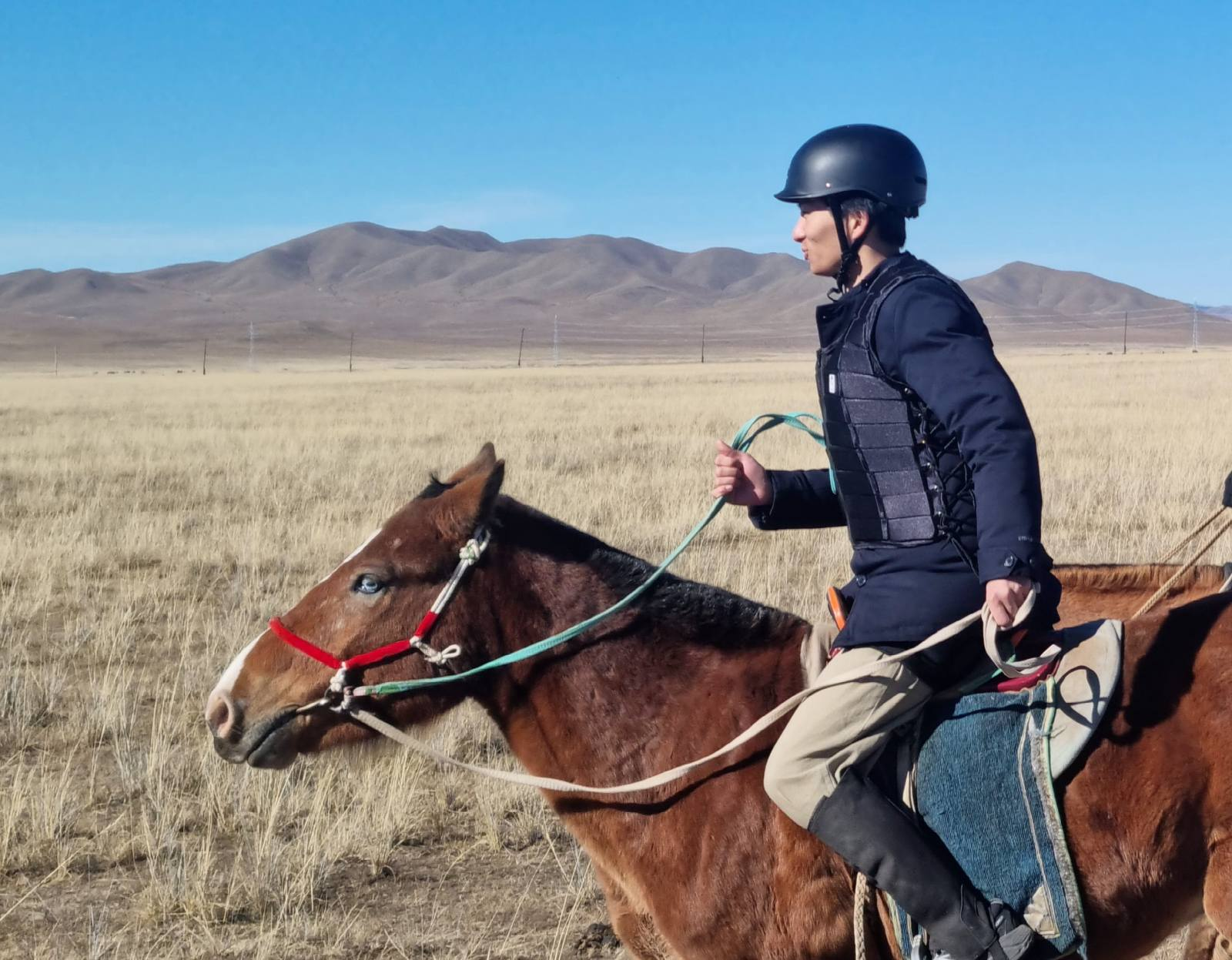
Hello! I am Chika, and I teach horseback riding at Horse Camp Mongolia.
When we tell visitors during our camp’s basic orientation, “Please make a ‘Chu!’ sound when you want to move the horse forward,” many people are surprised and say, “Wait, horses move just by voice?”
At horseback riding clubs in Japan, horses are often cued to start by pressing your legs (calves) against their sides, but Mongolian horses listen closely to the “human voice” and act accordingly.
This time, we will introduce “Mongolian cue culture”—from the correct usage of the basic start cue “Chu!” to the unique calls used by nomads to move horses and livestock. Knowing these will make your horseback riding experience many times more fun!
1. Basic Start Cue: “Chu! (Chu / Чү)”
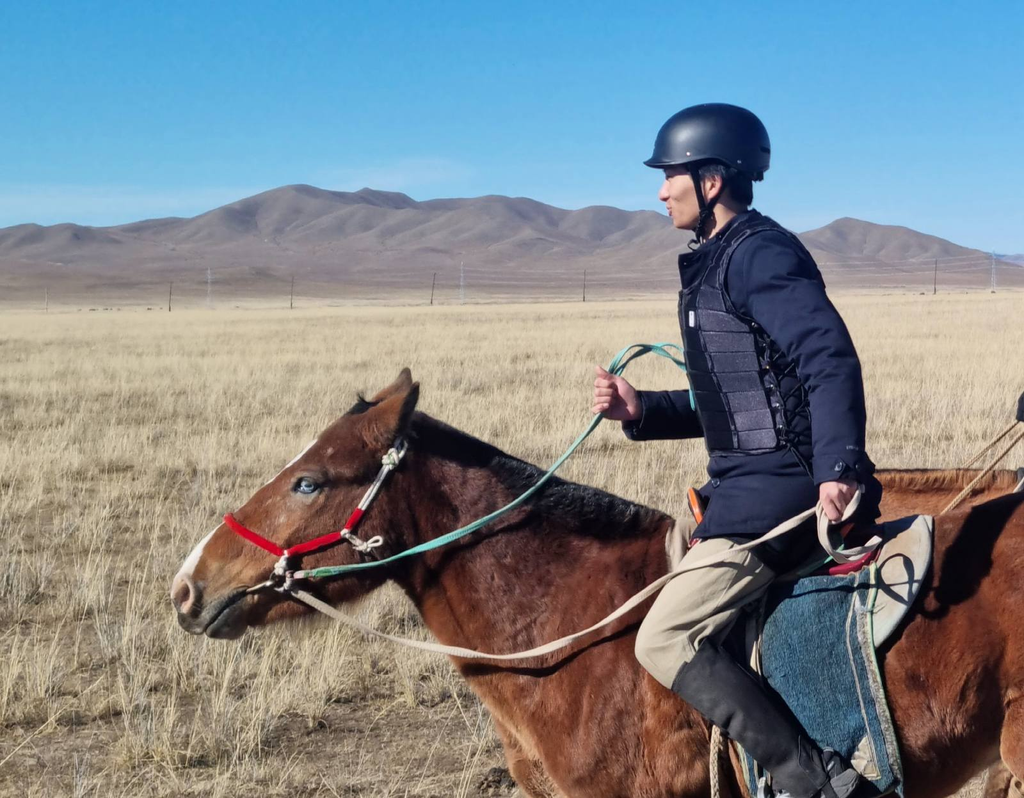
First is the “Chu!” that we teach everyone first in the beginner’s lesson.
- What kind of cue is it? It is a sign for the horse to start moving, equivalent to “Go” or “Move forward.” Pucker your lips and make a short, sharp “Chu!” sound by flicking your tongue against the back of your front teeth.
- Tips for making it well: Rather than saying it in a quiet, unenthusiastic voice, look fixedly at your destination ahead (such as the target flag or hill) and pronounce it clearly so it reaches the horse’s ears.
- Important note: Saying “Chu!” while pulling tightly on the reins is like pressing the accelerator while stepping on the brakes, which confuses the horse. The key is to give the cue after slightly loosening the reins.
2. “Chuu! (Chuu / Чүү)” When Increasing Speed or Riding Long Distances
There is also a call like “Choo!” or “Chuu!”, which is a slightly prolonged version of “Chu!”.
- When is it used? It is used when prompting a horse that is already walking to “walk a bit faster” or “let’s run!”, or when you want to pick up speed across a wide steppe.
- A scene from the nomad life: When gathering a herd of horses from a distance or galloping across the plains, spirited cries of “Choo! Choo!” echo from all over the grassland.
Please rest assured that for safety’s sake during beginner lessons and day tours, you will not give cues to increase speed on your own without instructions from the instructor.
Unique Nomad Calls! Calling and Soothing Horses: “Gurii, gurii (Gurii, gurii / Гурий,”гурий)」
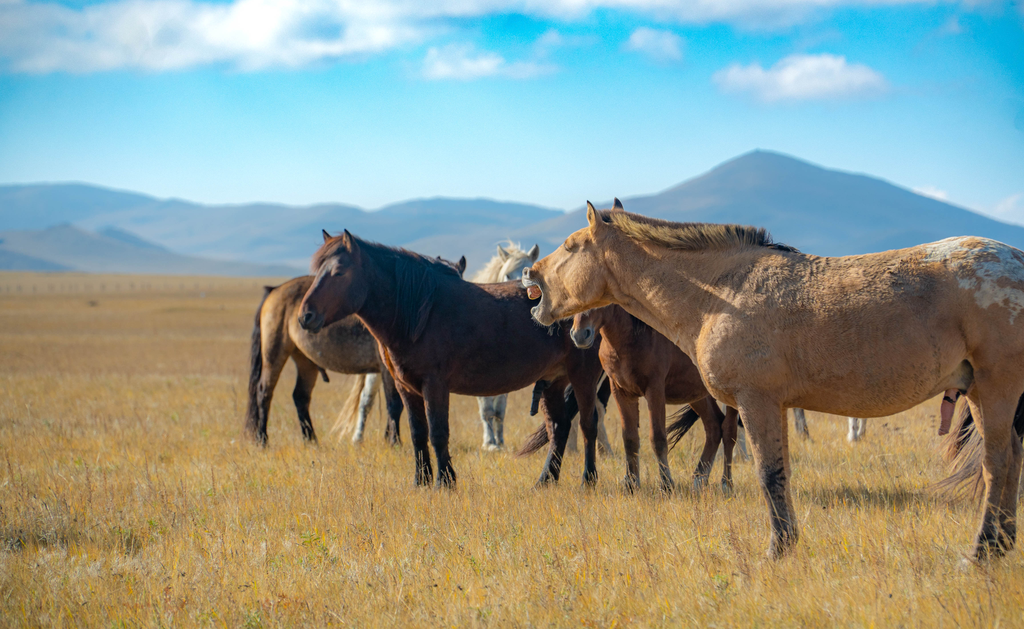
When nomads gather grazing horses or call them over at milking time, you sometimes hear a powerful call: “Gurii, gurii!”
- What does it mean? It is a traditional call used to draw horses closer, calm them down, or direct their attention here.
- Sound and characteristics: To make sure it carries far even across the windy, vast steppe, they project a deep, thick voice from the bottom of their belly. When the mares living in the herd hear this voice, they understand, “Ah, it’s time to go back. I need to get ready for milking,” and naturally make their way toward the “zel” (tethering post) where the foals are tied.
It’s not just voice! “Stopping” and “Turning” communicated through reins and body」
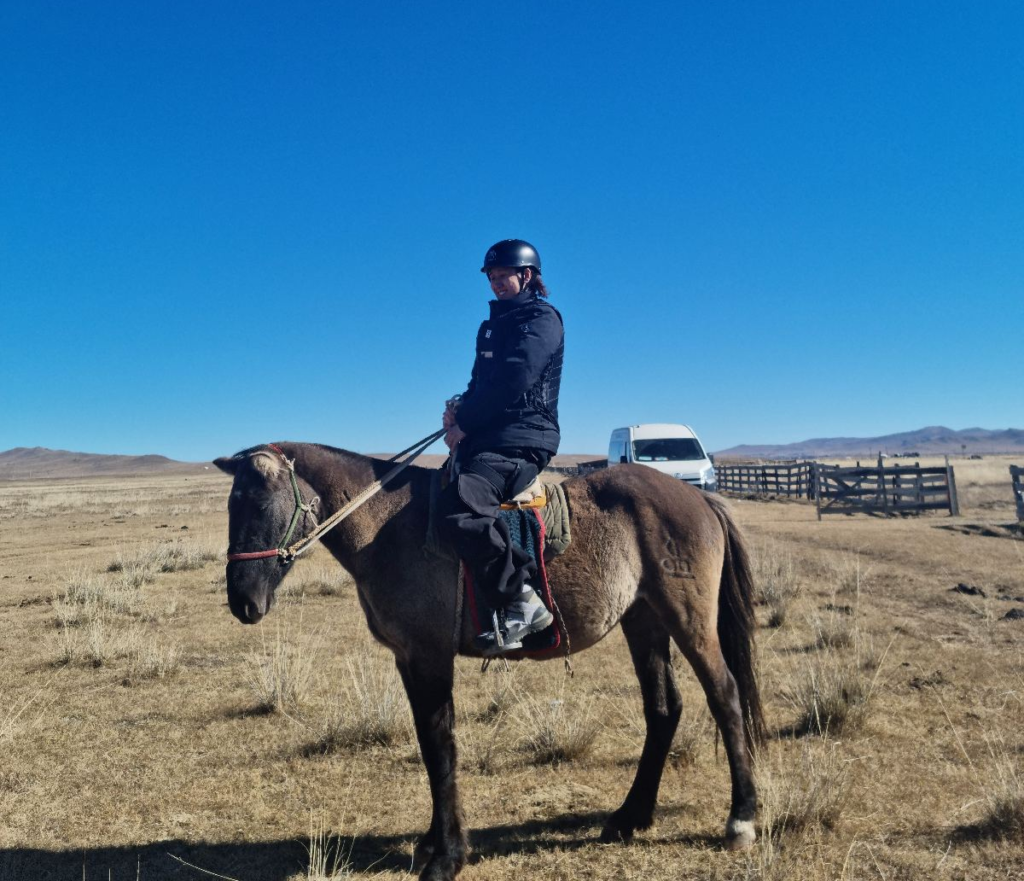
声で進める一方で、馬を安全にコントロールするためには手綱と姿勢の合図が欠かせません。
| 動作 | 合図の方法 | ポイント |
| 止まる(停止) | 手綱を手前へ引き、身体を少し後ろへ預ける | 綱引きのように足を踏ん張り、馬が完全に停止したら手綱を少し楽にする。 |
| 曲がる(旋回) | 行きたい方向へ視線を向け、曲がる側の手綱を軽く引く | 手元を見ず、行きたい方向にある目印(旗や木)をしっかり見つめる。 |
声で意思を伝え、身体で方向や停止を指示する。この2つが揃うことで、馬は「乗り手が何をしたいのか」を正確に理解してくれます。
合図が通じた瞬間の感動を、ぜひ草原で!
モンゴルの乗馬は、力づくで馬をねじ伏せるものではありません。
自分の声で「チュ!」と伝えた瞬間に、馬がスッと耳を後ろに向けて声を聞き、最初の一歩を踏み出してくれる。その小さなコミュニケーションが通じた瞬間は、誰もが笑顔になる最高の体験です。
ぜひ当キャンプで、生きた馬との「会話」を体験してみてくださいね!