Hello! I’m Chika, a horseback riding instructor at Horse Camp Mongolia.
When people planning a trip to Mongolia or researching horseback riding tours ask me questions, one topic comes up almost every time: airag, Mongolia’s traditional fermented mare’s milk.
“Do people really drink milk from horses?” “Is it alcoholic, or is it more like yogurt?” “Honestly, does it taste good?” Many visitors are curious about this unfamiliar drink and want to know what it’s really like.
Known as Airag (Айраг) in Mongolian, this traditional fermented drink is much more than just a beverage for us nomadic people. It is an important part of our food culture and a traditional staple that sustains us throughout the summer.
In this article, I’ll share my personal perspective on everything you might want to know about airag — from its distinctive taste and how it’s made to what it means in nomadic life.
What Does Airag Taste Like?
The most common reaction I hear from Japanese visitors trying airag for the first time is: “It tastes like a fizzy drinking yogurt with a really strong sour flavor.”
- Sourness: Because it is fermented, airag has a sharp, tangy taste that can remind you of lemon juice or vinegar.
- Texture and Fizz: Naturally occurring carbon dioxide gives it a light sparkle, creating a refreshing, fizzy sensation on your tongue.
- Aftertaste: Unlike milk, airag isn’t particularly rich or heavy. It is surprisingly light, with a clean finish and a faint, earthy aroma reminiscent of wild grasses on the steppe.
Many first-time drinkers make a face and exclaim, “It’s so sour!” But after spending time horseback riding and working up a sweat on the steppe, that tangy flavor and gentle fizz can feel incredibly refreshing. It’s not unusual for visitors to find themselves enjoying it so much that they ask for another serving!
Is Airag Alcoholic? Alcohol Content and Nutritional Benefits
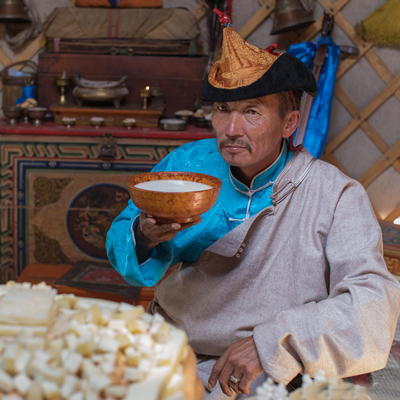
Although the Japanese name for airag translates to “fermented mare’s milk,” with the word “alcohol” in its name, it is not a strong alcoholic drink.
- Very Low Alcohol Content (Approximately 0.5–3%)Airag contains a small amount of alcohol because it naturally ferments through the action of yeast and other microorganisms. Its alcohol content is generally much lower than that of beer, which typically contains around 5% alcohol. In Mongolia, airag is a familiar traditional drink enjoyed by adults and, in some households, children as well. However, people who are particularly sensitive to alcohol may feel a slight warming sensation after drinking it.
- A Natural Source of Nutrients on the SteppeOn the vast grasslands, where growing vegetables can be difficult, airag has traditionally played an important role in the summer diet of nomadic people. It contains nutrients such as vitamin C, minerals, amino acids, and microorganisms associated with fermentation. As part of the traditional nomadic diet, it helps provide variety and nourishment during the summer months.
How Is Airag Made? Milking and Churning: A Summer Tradition
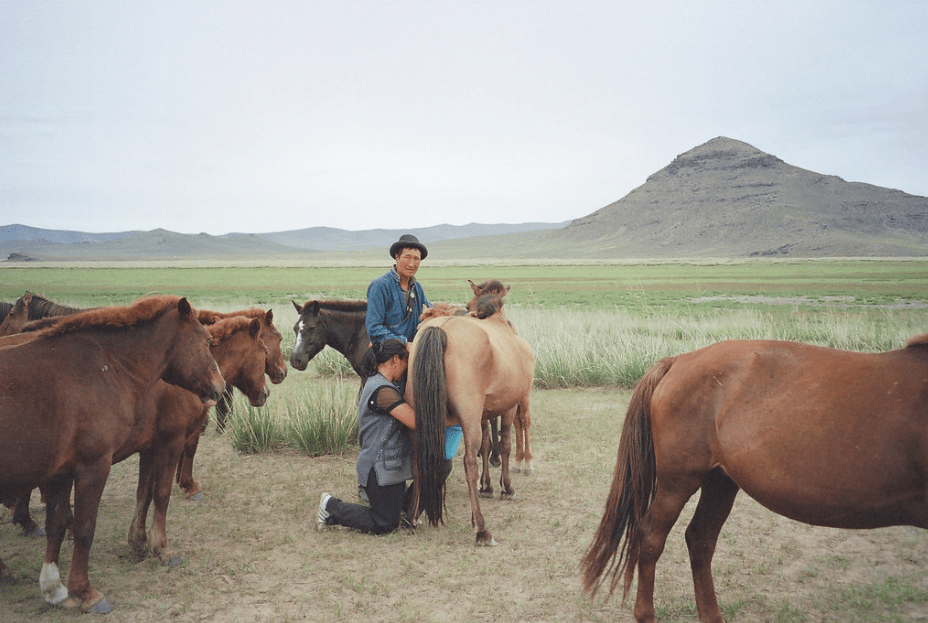
Airag is made only during the summer months, when foals are born and the Mongolian steppe turns lush and green.
- Collecting Milk from the MareNomadic families traditionally milk their mares four to six times a day, at intervals of around two hours. First, the foal is allowed to suckle briefly to help the mare relax. The remaining milk is then collected for people to use. This traditional practice helps ensure that the foal gets its share of the milk.
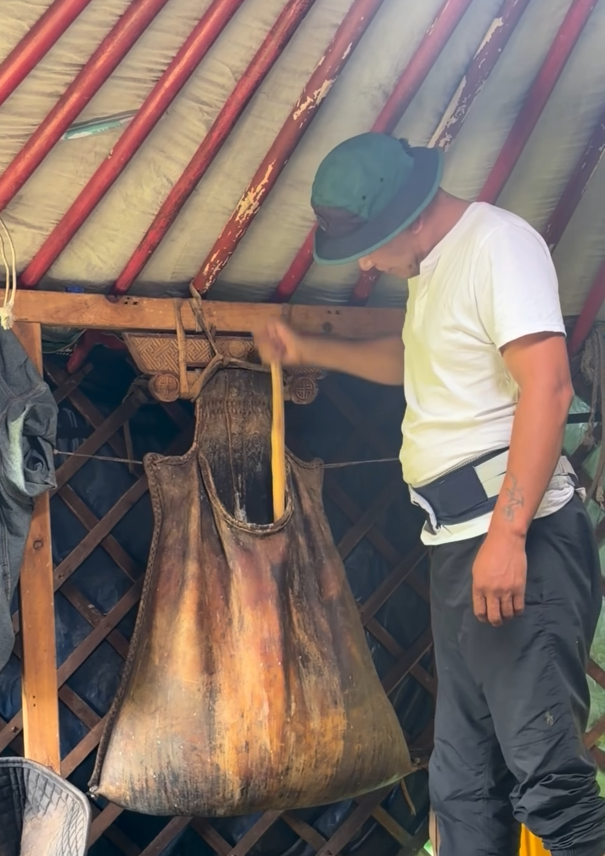
- Churning the Milk in a Leather BagThe freshly collected mare’s milk is poured into a large bag made from cowhide, although some families today use specially designed containers. It is then vigorously stirred thousands upon thousands of times using a wooden churn called a buluur.
- Introducing Air and Allowing Natural FermentationAs the milk is repeatedly churned with a rhythmic splashing sound, air is incorporated into the liquid, helping lactic acid bacteria and yeast carry out the fermentation process. Gradually, the fresh mare’s milk develops into airag. The rhythmic sound of the wooden churn rising and falling in front of a ger is one of the unmistakable sights and sounds of a Mongolian summer.
Etiquette When Visiting a Nomadic Family’s Ger
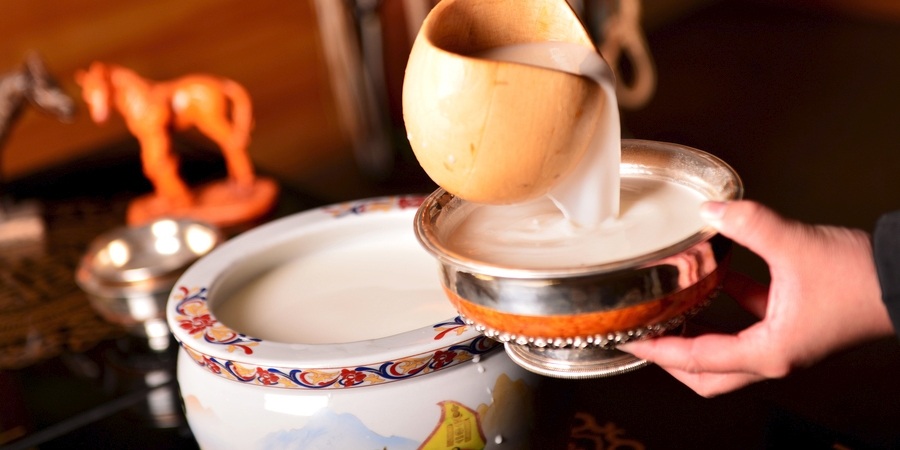
During a horseback riding tour, you may visit a nomadic family’s ger and be warmly welcomed with a large bowl filled with airag.
- Accept the Bowl with Your Right Hand: When receiving the bowl, hold it with your right hand and gently support your right elbow with your left hand. This is a traditional Mongolian gesture of respect.
- You Don’t Have to Force Yourself to Finish It: If the strong sour taste isn’t to your liking, there’s no need to drink the entire bowl. Taking even a small sip and returning the bowl with a smile is a respectful way to show that you appreciate the family’s hospitality. Even if you enjoy the airag enough to drink most of it, it is customary in some households to leave a small sip at the bottom of the bowl before returning it.
Frequently Asked Questions About Airag (Fermented Mare’s Milk)
Q. Can airag upset my stomach?
A. Airag contains beneficial microorganisms produced during fermentation, which may affect digestion and bowel movements. If you are prone to digestive discomfort after consuming dairy products or have a sensitive stomach, it’s best to start with just a few spoonfuls or a small sip and see how your body responds.
Q. Can I try airag on a winter tour?
A. Airag is generally a seasonal summer drink. From autumn onward, milking usually stops so that mares can focus on raising their foals, and fresh airag is not typically produced during winter. If you want to experience freshly made, authentic airag, July and August are the best months to visit!
Experience Mongolian Culture Through the Gifts of the Horse
Riding across the vast Mongolian steppe is an unforgettable experience, but tasting the gifts that horses provide is another wonderful way to connect with Mongolia’s nature and nomadic culture.
If you have the chance to try airag during a summer tour, don’t be afraid to give it a sip! You might discover a refreshing taste that brings to mind the sunshine and fresh breezes of the Mongolian steppe.