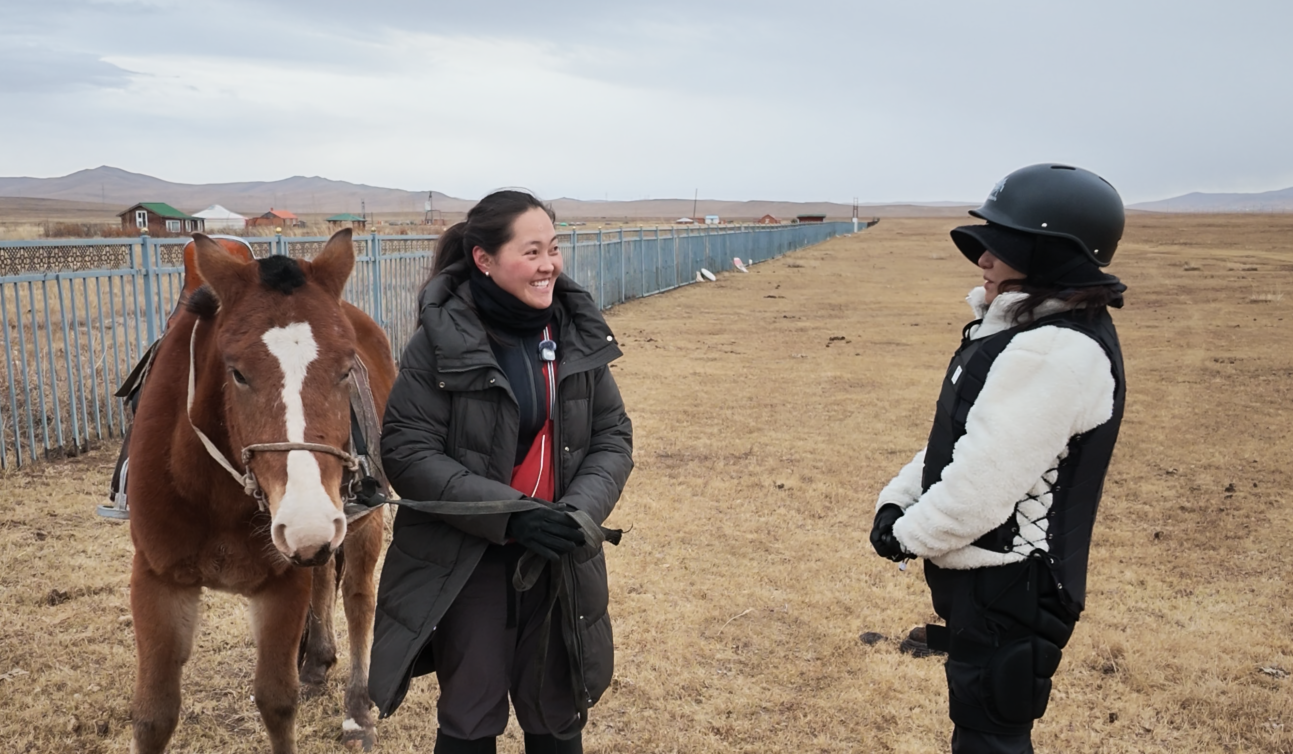
Hello! I am Chika, and I teach horseback riding at Horse Camp Mongolia.
When enjoying horseback riding in the great outdoors, have you ever wondered, “What is the horse thinking right now?” or “Are they scared?”
Horses cannot speak, but they clearly communicate their feelings using various parts of their body. Among them, the “ears” are where emotions appear the most clearly.
Just by looking at the direction and movement of their ears, you can easily understand what the horse is paying attention to, whether they are at ease, or if they are tense. This time, we will introduce “how to read horse ear signs” to make horseback riding even more enjoyable and safe!
Understanding a Horse’s Emotions Through Its Ears! 4 Basic Signs
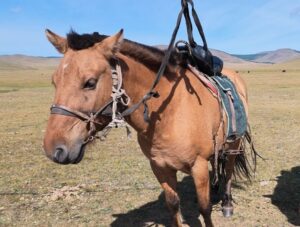
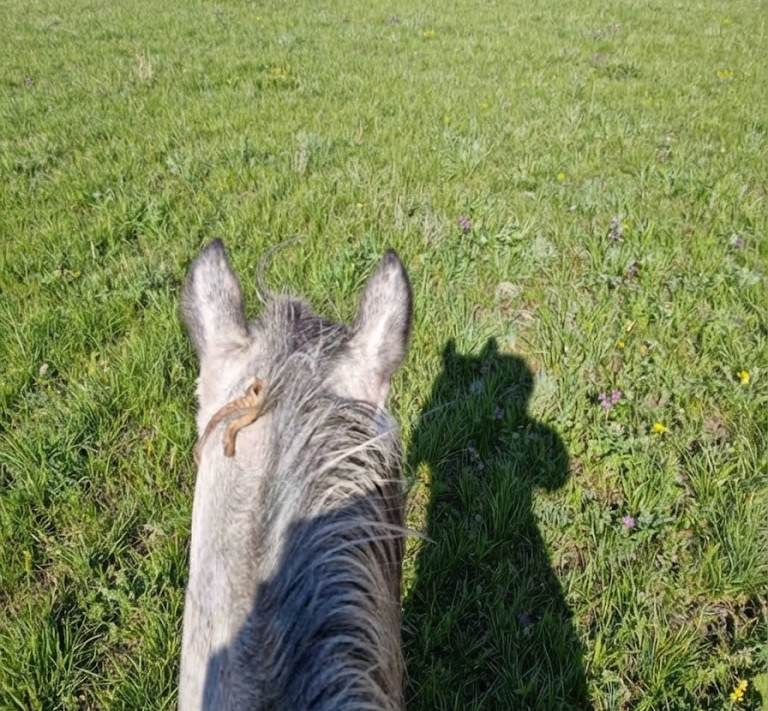
A horse’s ears can move independently to the left and right, close to 360 degrees. When you look down at a horse’s head from above while riding, try checking which direction the ears are pointing.
1. Both ears pointing sharply forward: Interest / Concentration
When both ears are facing straight forward, it is a sign that the horse is interested in something in front of it or is looking with concentration.
With thoughts like “There is something over there” or “Which way are we heading next?”, its awareness is firmly directed toward the scenery ahead or the direction of travel. Because it is in a very proactive state, you can ride forward with peace of mind while keeping your eye on your target (a flag or a distant hill).
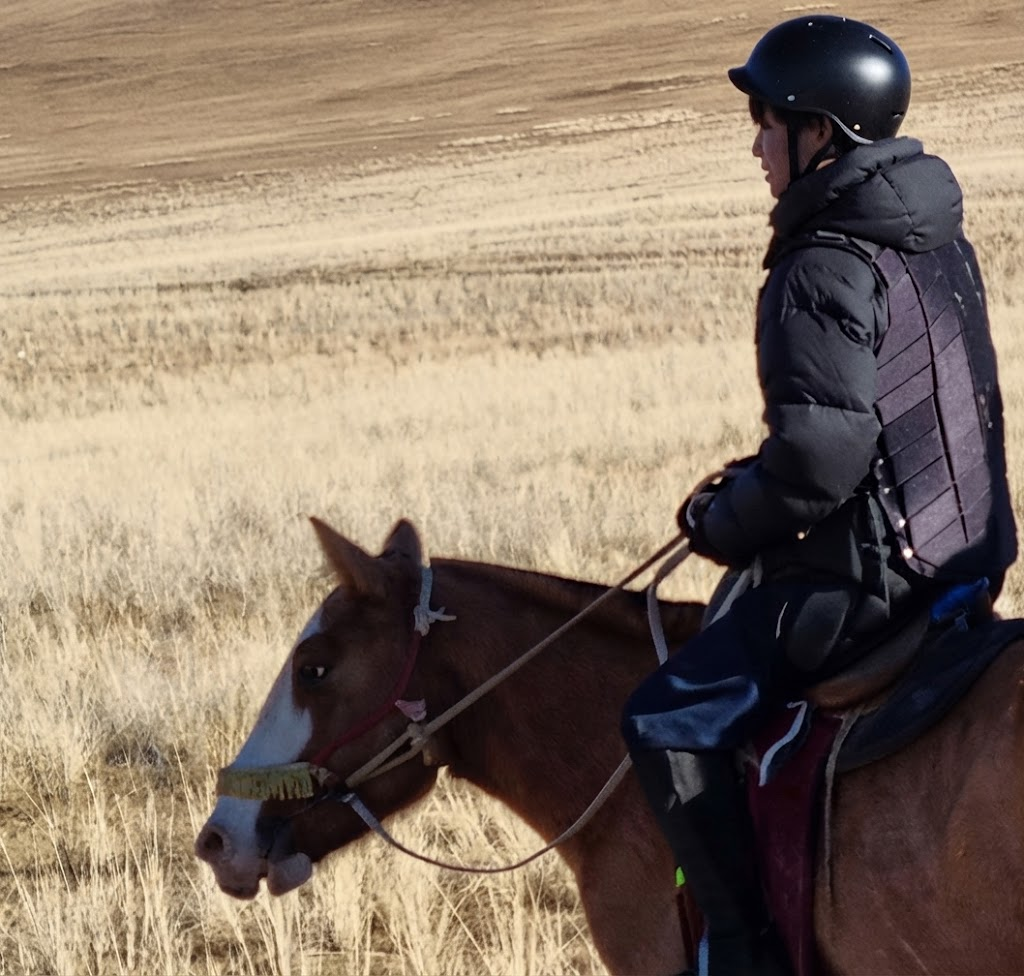
2. Ears fluttering left and right or back: Listening to surroundings and instructions
When the ears are moving subtly forward, backward, or sideways, the horse is intently picking up surrounding sounds.
Also, when one ear points smoothly backward (toward the rider), it is a sign that it is “trying to listen to your voice and instructions from its back.” If the ear turns backward the moment you give a start cue like “Chu!” or speak to it, it is proof that your words have properly reached the horse.
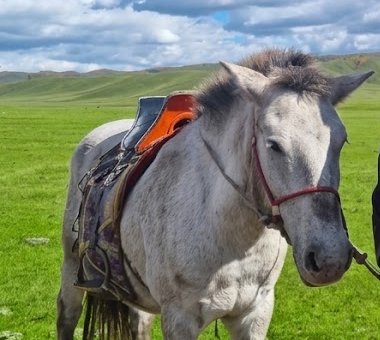
3. Ears drooping loosely to the sides: Relaxation / Peace of mind
When the ears are flattened to the left and right and pointing sideways as if losing a bit of tension, it is a sign of deep relaxation.
The horse is completely calm, thinking, “This place is safe” or “It feels nice and leisurely.” This is an expression frequently seen during breaks or when catching their breath after exercise.
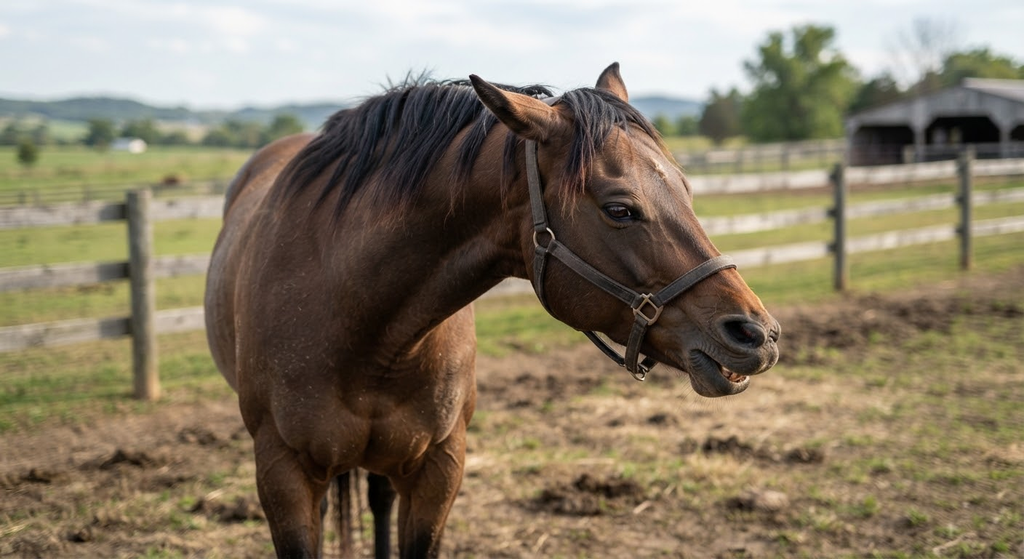
4. Ears completely flattened backward: Anger / Alert (Be careful!)
The one that requires the most caution is when the ears are flattened tightly and flat against the back of the neck. This is also commonly known as “pinning the ears.”
It is a sign of strong displeasure, wariness, and intimidation, meaning “I don’t like this” or “Go away!” It is seen when another horse gets too close or when the horse is strongly frightened by something.
Understanding a horse’s feelings makes horseback riding even more enjoyable!
“Ah, it listened to my voice just now.”
“It’s focusing on the path ahead.”
Once you are able to read ear signs like that, you will come to feel the horse not just as a ride, but as a “living partner” traveling across the steppe together.
When you participate in a horseback riding tour in Mongolia, please try observing the movement of the horse’s ears from the saddle. Your communication with the horse will become so much more fun!