Hello, I am Chika!
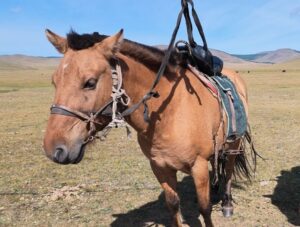
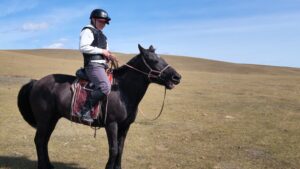
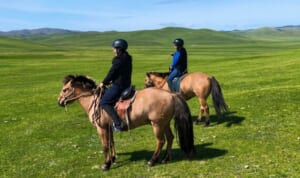
The horses you interact with at the camp are gentle, domesticated horses that have lived alongside nomads. However, Mongolia is home to “the world’s only wild horses that have never been touched by human hands.”
That is a special horse called “Takhi” in Mongolian, and globally known as the Przewalski’s horse.
Protected in “Hustai National Park,” about two and a half hours by car west of Ulaanbaatar, they have a completely different side to them compared to the horses we usually interact with.
Ferocious Temperament That Keeps People Away and Fierce Territorial Disputes
If you have the image that “horses = gentle and can be petted,” you might be surprised by the appearance of Takhi.
Takhi have an extremely wild temperament and possess pure, untamed fighting spirit. If a person tries to even slightly approach them, they will threaten and try to drive them away out of strong wariness. Of course, it is absolutely impossible to put reins on them and ride them.
In particular, disputes between males over territory and herds (harems) are fiercely intense. Uttering sharp cries, they bite each other violently and unleash powerful kicks with their hind legs. Protecting their herd while getting covered in scars, only the strong males that survive pass on their bloodline. That is the true wild strength needed to survive the harsh great outdoors on their own.
The “Miraculous Horses” That Once Disappeared from the Natural World
Takhi once lived widely across the grasslands of Mongolia, but due to climate fluctuations, overhunting, and overgrazing, their numbers plummeted sharply, and they vanished from the natural world in the 1960s (extinct in the wild).
However, a project was launched to gather individuals protected in zoos around the world and return them to the land of Mongolia. With support from countries like the Netherlands, the first Takhi returned home to Hustai National Park in 1992.
Thanks to the steady watch and conservation activities of rangers, they now repeat generational turnover as completely wild herds and are increasing in number.
How to Distinguish Them from Domesticated Horses
When comparing camp horses and Takhi side by side, there are clear differences in their physical structures.
- Stiff, short mane: Unlike domesticated horses whose manes hang down along their necks, their short manes stand vertically like a zebra’s. They also have almost no forelocks.
- Sturdy build: They have large heads, thick necks, and extremely robust legs and lower backs. Their coat color is yellowish-brown, a single black stripe runs down the back (eel stripe), and their lower legs are black.
- Chromosome count: Domesticated horses have 64 chromosomes, while Takhi have 66.
Rules for Safe Observation at Hustai National Park
Because they have a fierce temperament and strong wariness, strict rules must be followed when observing Takhi at Hustai.
- Maintain a distance of 300 meters or more: You must never approach them. To avoid startling or stimulating them, always follow the ranger’s instructions and watch over them from a far distance.
- Binoculars or telephoto lenses are essential: Since observation will be from a long distance, binoculars or telephoto cameras are indispensable for capturing facial expressions and vigorous movements.
- The prime times are “early morning” and “evening”: During the hot daytime hours, they rest while catching the breeze on top of mountains or deep inside valleys, but in the cooler mornings and evenings, they come down to the river to drink water.
At dusk, a herd of Takhi drinking water in a tense atmosphere while protecting each other is breathtakingly overwhelming.
Gentle domesticated horses that humans can control, and Takhi that maintain a harsh and noble wildness. By knowing both, you will surely be able to appreciate the depth of Mongolia’s horse culture even more.