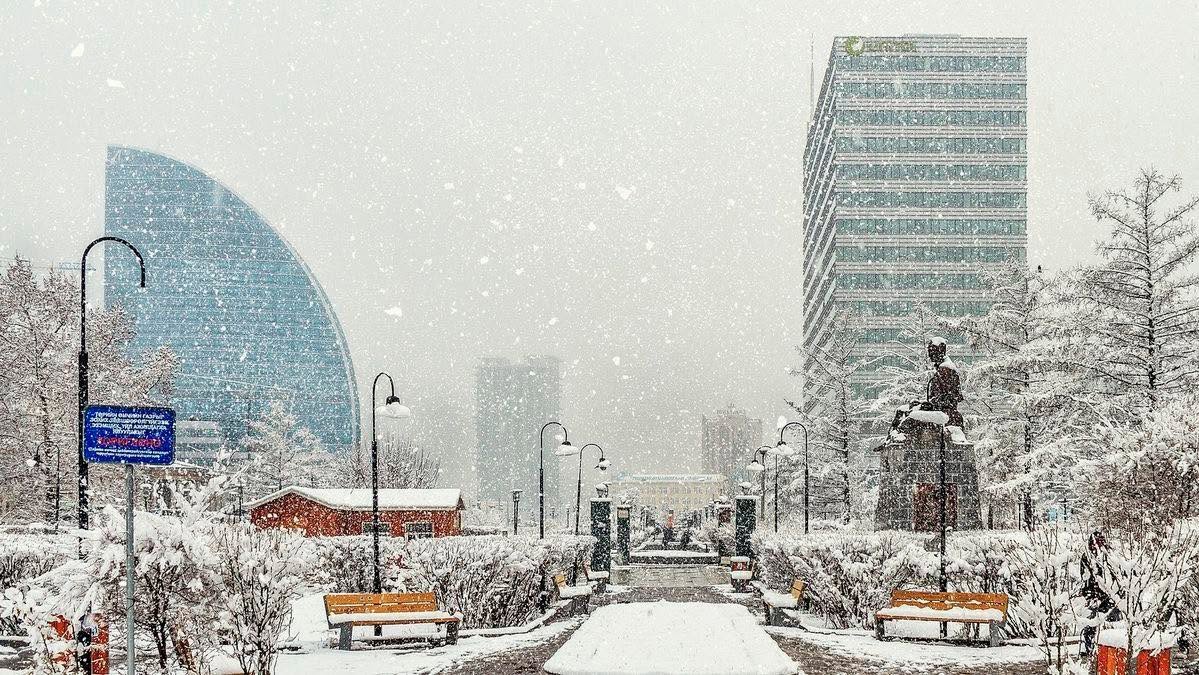
Hello! I’m Chika from Horse Camp Mongolia. I’m currently in Mongolia’s capital, Ulaanbaatar.
When I looked out the window, I saw that the cold wind had swept into the city, where clear autumn skies had lasted until just yesterday. The first snow has finally arrived!
The peaks of the mountains surrounding the city, including Bogd Khan Mountain, are lightly dusted with white. People walking along the streets are bundled up in thick down coats and fur hats, hurrying to escape the cold.
If you’re used to Japanese weather, you might be surprised and think, “Snow already?!” But autumn in Mongolia really is fleeting. Once the first snow falls, the air across both the city and the steppe suddenly turns crisp and cold, signaling the arrival of the long, harsh Mongolian winter.
As I look up at the snow in Ulaanbaatar, my thoughts immediately turn to the horses still out on the steppe.
“Doesn’t the early snowfall leave the horses freezing out in the open?”
“How do they survive the winter without heated stables?”
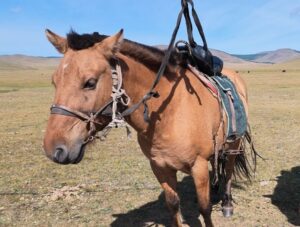
I often hear these concerns from visitors. But Mongolian horses have remarkable natural adaptations that help them survive in the wild, even through the harshest winter conditions.
In this article, I’ll share what Ulaanbaatar looks like as the first snow arrives, along with a closer look at how these resilient horses prepare their bodies for the long winter ahead!
1. A Natural Winter Coat: How Horses Grow Thick, Fluffy Fur to Stay Warm
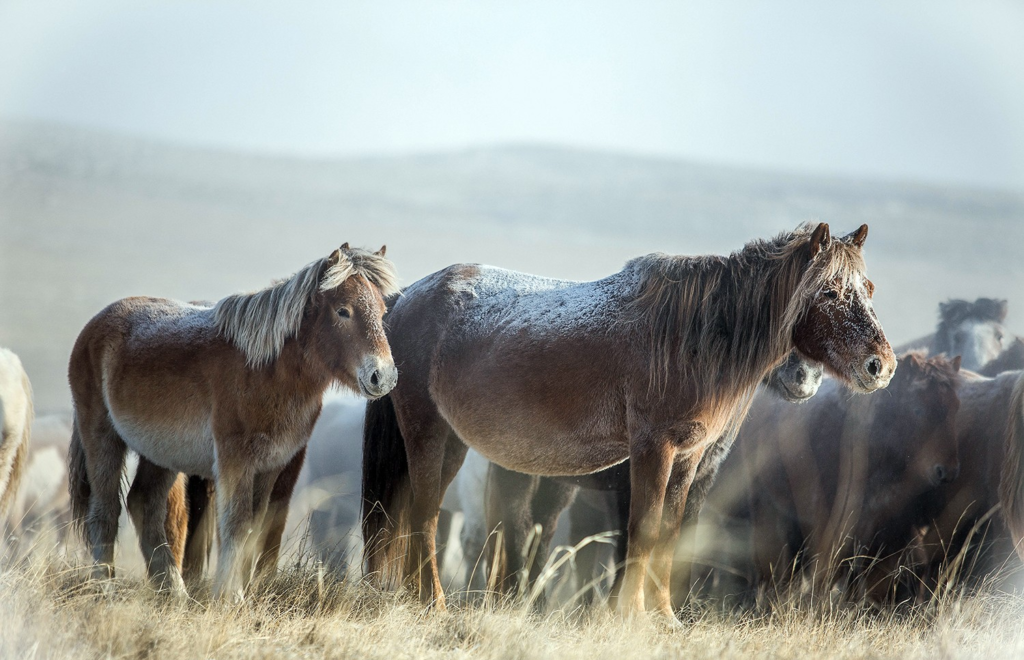
As the first signs of winter approach, remarkable changes take place in horses’ bodies.
The short, sleek summer coat is gradually replaced by an astonishingly thick, dense winter coat that grows longer and covers the entire body.
Unlike spring, when horses shed large amounts of hair, autumn and winter bring a period of rapid growth. Their coats become thicker, denser, and wonderfully fluffy, giving them extra protection against the cold.
- A Natural, Two-Layer Down JacketThe winter coat works much like a two-layer down jacket. The longer outer hairs help repel snow and wind, while the soft, dense undercoat traps warm air close to the skin, helping retain body heat. Run your hand over a horse’s winter coat, and it can feel as soft and fluffy as a thick wool carpet.
- How Can Snow Sit on a Horse’s Back Without Melting?A horse’s winter coat provides such effective insulation that relatively little body heat escapes through the outer layer. As a result, it’s not unusual to see horses standing on the snowy steppe with a thick layer of snow resting on their backs without melting. Keeping the snow from melting helps prevent the coat from becoming wet, which can reduce its insulating ability. This natural barrier is one of the ways horses cope with Mongolia’s extreme cold.
- White Clouds of Breath Rising from Their Nostrils and BacksWhen horses move powerfully across the freezing steppe, their breath forms white clouds in the cold air. After exertion, you may also see steam rising from their warm bodies. It’s a beautiful sight that captures the vitality and resilience of horses during a Mongolian winter.
2. A Protective Layer of Fat and the Natural Skills of Their Hooves
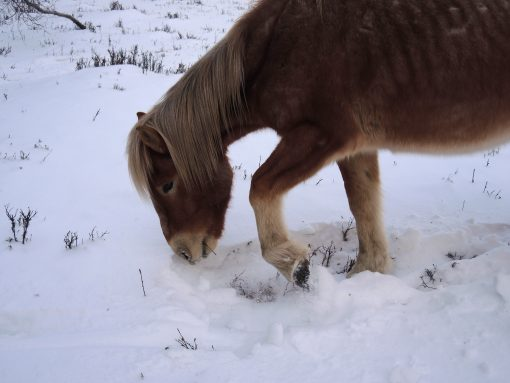
Horses don’t just grow a warm winter coat — they also prepare their bodies by building up energy reserves to help them survive the cold.
- Building a Protective Layer of Fat During AutumnThroughout autumn, right up until the first snow arrives, horses graze constantly, eating the grasses available on the steppe. By building up a layer of body fat, they create an additional energy reserve that helps them cope with freezing temperatures and sustain themselves through the long winter months.
- Using Their Front Hooves to Dig for Grass Beneath the SnowEven when the steppe is blanketed in snow, horses don’t have to wait for humans to bring them food. Using their strong front hooves, they skillfully scrape the snow aside to uncover the dry grass beneath, which has been naturally preserved in the cold. Their powerful instinct to find food for themselves is one of the reasons horses have survived on the Mongolian steppe for thousands of years.
3. Winter Preparations in Ulaanbaatar and Among Nomadic Families on the Steppe
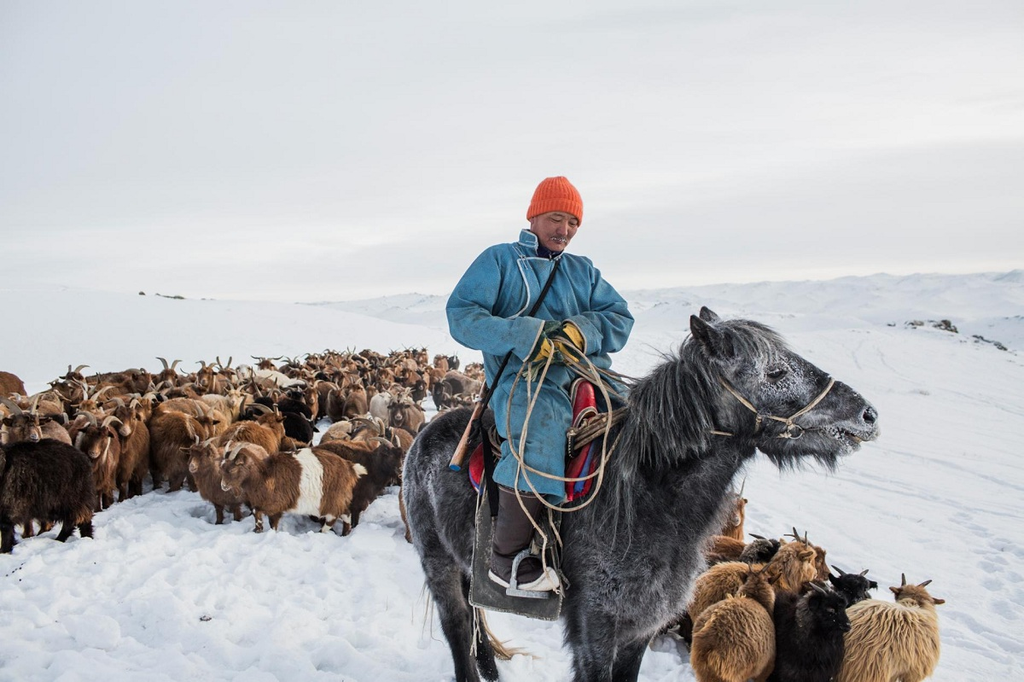
Just as horses prepare to weather the winter with their natural winter coats and fat reserves, we humans are also busy getting ready for the cold season.
- Winter Preparations in UlaanbaatarAcross the city, drivers switch to winter or studded tires, while the central heating systems in apartment buildings and offices begin operating at full capacity, keeping indoor spaces warm and cozy. At local markets, you’ll find rows of fur coats, felt boots, and mutton — all essential items for the long Mongolian winter.
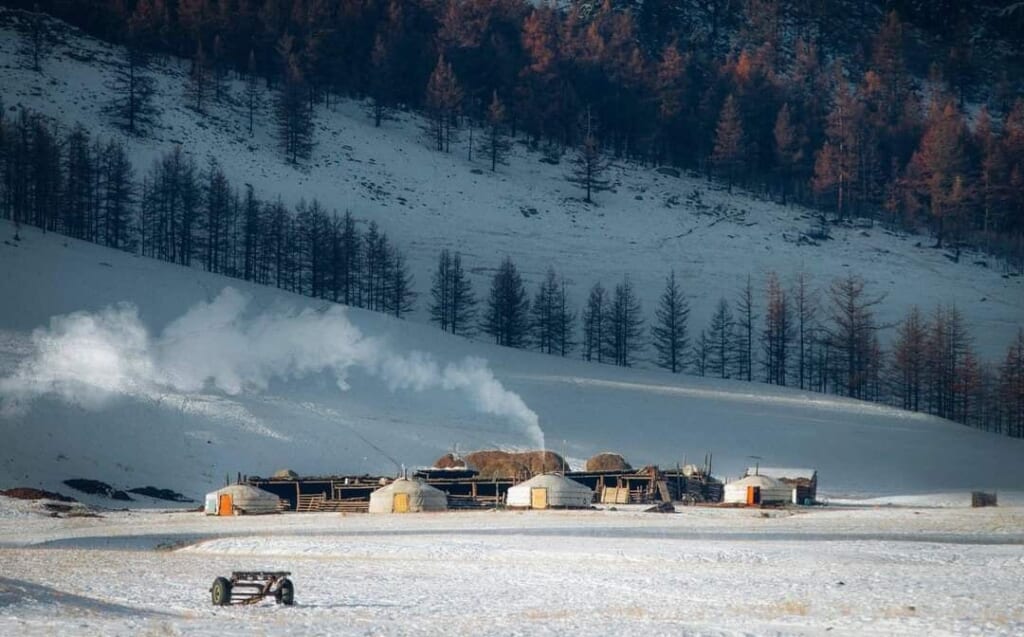
- Winter Preparations Among Nomadic Families on the SteppeTo protect themselves and their livestock from the bitter cold, nomadic families move their gers to sheltered winter campsites, often near the foot of mountains or in locations protected from strong winds. They add extra layers of felt insulation around their gers and firmly seal the lower edges with earth to keep icy drafts out.
Frequently Asked Questions About the First Snow and Winter in Mongolia
Q. What should I wear for a tour after the first snow?
A. When the first snow begins to fall around Ulaanbaatar, you’ll need clothing that provides at least as much warmth as you would wear during the coldest part of winter in Japan, in January or February. Dress in layers, including a well-insulated, windproof down jacket, a warm knit hat that covers your ears, a neck warmer, and thick thermal base layers such as Heattech.
Q. Can I go horseback riding even when the ground is covered in snow?
A. Yes! Horseback riding is possible in winter when you have the appropriate cold-weather gear. Riding through snow-covered mountains and across the quiet, peaceful steppe offers a crisp, breathtaking beauty that feels completely different from summer. One of the special pleasures of this season is being able to feel the warmth of a horse wrapped in its thick, fluffy winter coat.
Resilient Life as Mongolia Enters the Snowy Season
When the first snow falls in Ulaanbaatar, you can feel the seasons changing rapidly as winter approaches.
The harshest cold is still ahead, with temperatures expected to plunge to several tens of degrees below zero. Yet when I see horses standing calmly across the vast landscape, their thick winter coats keeping them warm and white breath drifting from their nostrils, I’m reminded of the power of nature and the incredible resilience of life.
Mongolia’s magnificent natural landscape transforms dramatically with each passing season.
I hope you’ll have the chance to see these adorable, fluffy winter-coated horses up close and experience their beauty for yourself someday!