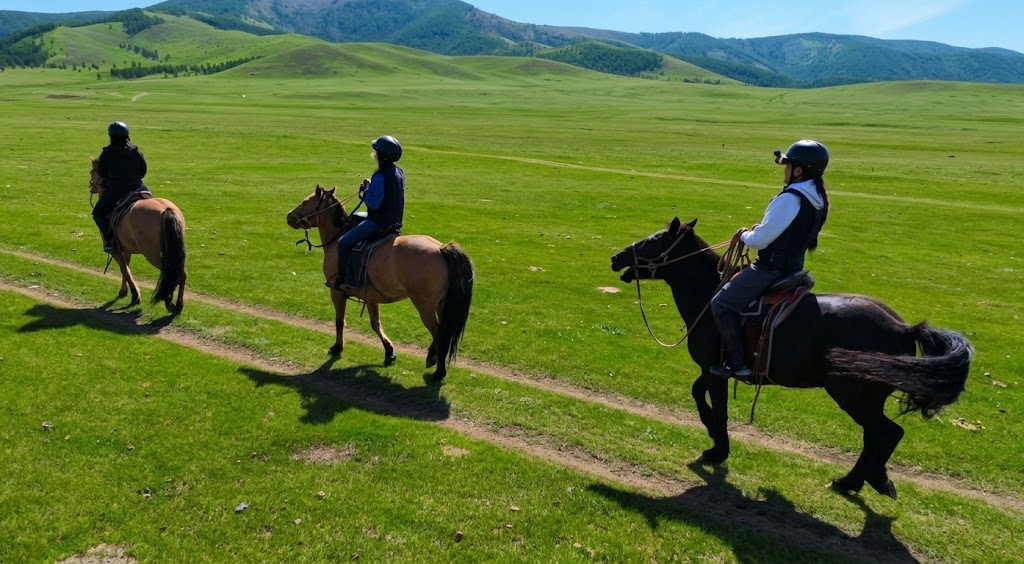
Why do we get too close to the horse ahead?
There are two reasons why beginners end up getting too close to the horse in front.
- The horse’s instinct to “stay together in a herd”
Because Mongolian horses live in herds, they naturally try to follow the horse ahead. If the rider leaves the reins loose without giving proper cues, the horse will decide on its own to walk right up behind the horse in front. - The rider is staring only at the hindquarters of the horse ahead
When nervous, people inevitably lower their gaze and tend to fixate on the “tail or hindquarters of the horse right in front of them.” When your gaze is focused close by, it’s easy to be late in noticing that the distance is shrinking.
What makes getting too close dangerous?
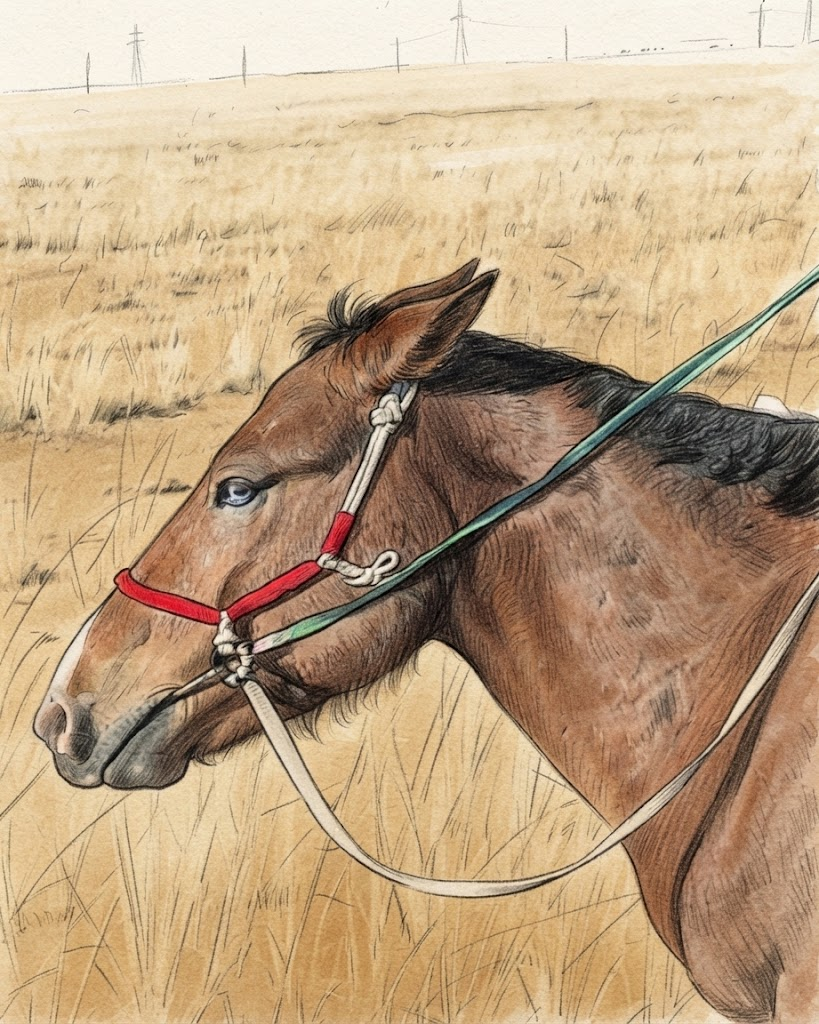
Even if it looks like they are just “walking nicely together,” it causes extremely intense stress for the horse.
- The danger of being severely kicked with hind legs (risk of kicks)
Because horses cannot see directly behind them, if something suddenly approaches from the rear, they feel an instinctive fear of being “attacked!” An irritated horse in front may unleash a powerful kick by bucking its hind legs upward. If this directly strikes the trailing horse or the rider’s legs, it can lead to severe injury. - Chain-reaction collisions from sudden braking
When the horse in front makes a sudden stop to avoid a hole or an obstacle, if the distance is too close, you will not be able to stop in time and will crash into it.
Guidelines for a safe “horse-to-horse distance” and tips on how to maintain it
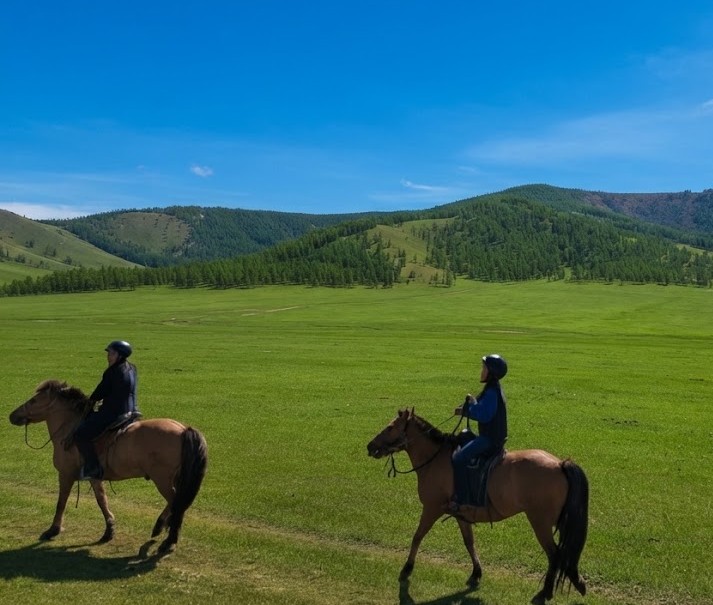
To safely navigate through the vast natural grasslands, you always need to leave an appropriate amount of space.
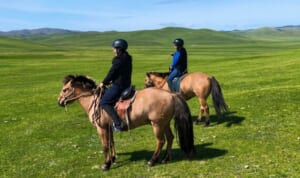
- The benchmark is “one to two horse lengths” (approx. 2 to 3 meters)
The basic rule is to always leave enough gap between the hindquarters of the horse ahead and the nose of your own horse so that another horse could fit right in. - Reduce speed by “pulling the reins toward you” if you get too close
If you feel the gap between you and the horse ahead is narrowing, slowly pull the reins toward your chest before you completely collide.- Give a slight “stop” cue to slow down your pace, and once you have maintained an appropriate distance, relax the reins again and return to the original walking rhythm.
- Return your course if you are about to ride side-by-side
Some horses will try to overtake the horse in front and pull up alongside them. Riding side-by-side can cause both horses to get excited and start fighting, so gently open the rein on the side you want to turn and steer your horse back into line behind the formation. - Direct your gaze toward the “distant scenery”
The best preventive measure is to stop staring at the hindquarters of the horse in front of you.
By looking at the instructor’s back, a distant hill, or the sky to maintain a wide field of vision, your body will naturally relax, and you will immediately notice changes in distance.
Maintaining an appropriate distance is kindness to the horse
Just like “following distance” in driving, maintaining a spacious “horse-to-horse distance” is an important manner that not only protects your own safety but also helps relax the horse walking ahead.
If you traverse the great grasslands while being considerate of the horse in front of you, the entire formation will stay calm, and your tour will become very comfortable. Please try keeping a mindful space from the horse ahead on your next ride!