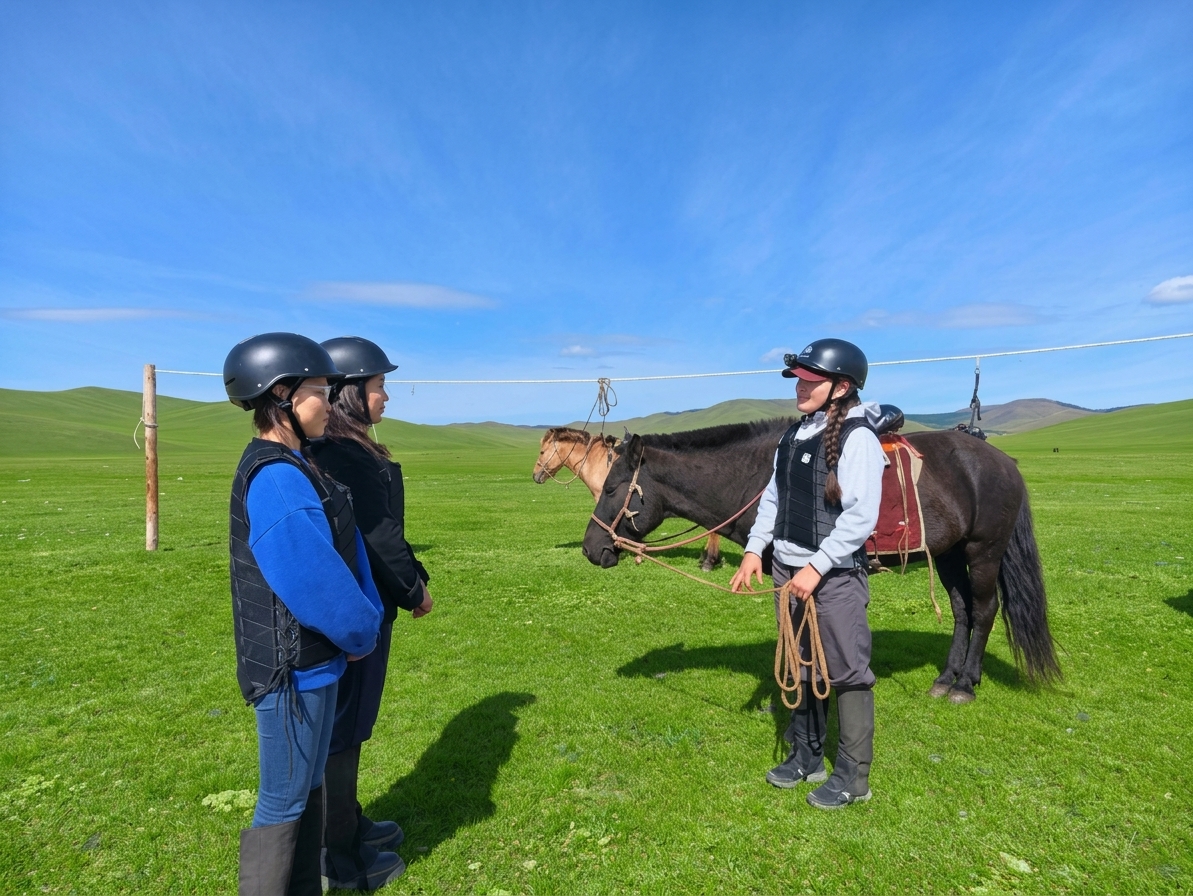
Hello! I am Chika, and I teach horseback riding at Horse Camp Mongolia.
Do you feel anxious, thinking, “I’d love to ride a horse in the vast Mongolian steppe, but I have no horseback riding experience and it’s a bit scary…”?
I grew up in a nomadic family, so horses have been close to me since childhood, but a horse seen up close for the first time feels much larger than you might imagine. It is completely natural to be nervous at first, and horses also closely observe your demeanor and tension.
At Horse Camp Mongolia, we never have guests handle a horse entirely on their own right away. We start with safe ways to interact and practice step by step. This time, we have put together the “basic procedures of horseback riding” that will give you peace of mind to know before joining the tour.
Basic Steps of Horseback Riding Beginners Should Master
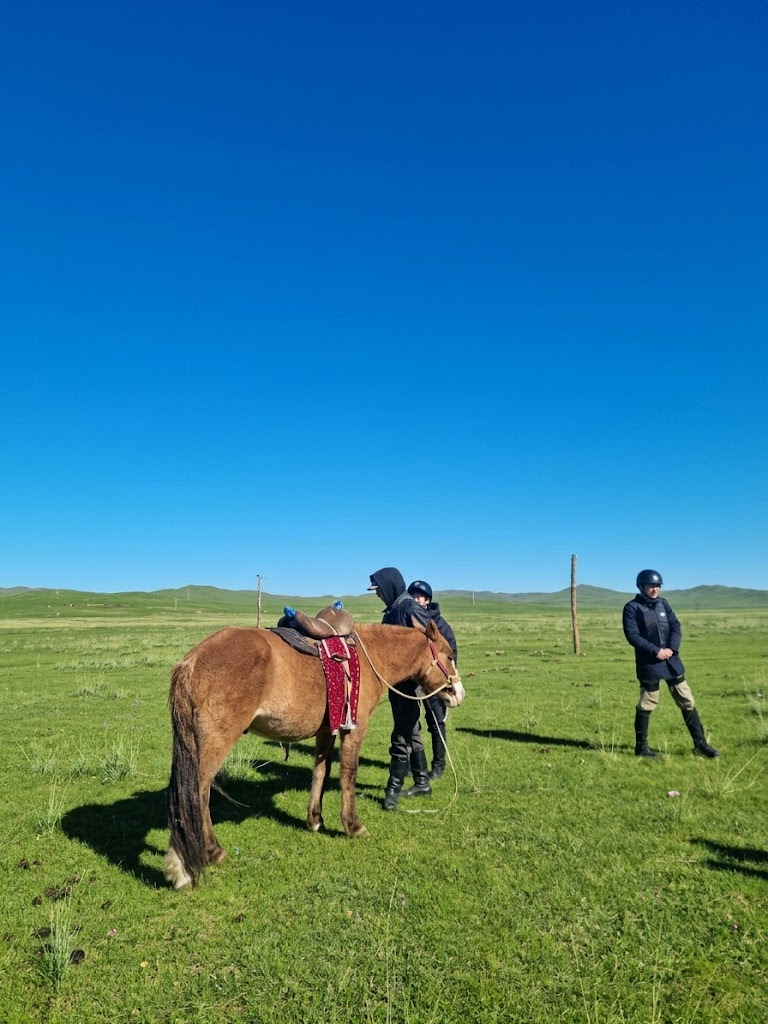
How to Approach a Horse: Entry Directly Behind Is Prohibited
The first step to befriending a horse is knowing the correct standing position. Horses have a wide field of vision, but they cannot see directly behind them. Because suddenly approaching from a blind spot risks startling them into kicking, approach slowly from diagonally ahead while speaking to them gently without raising your voice. First, feel the horse’s breathing and warmth, and take time for both of you to settle down.
2. Mounting and Dismounting Procedures Using a Western Saddle
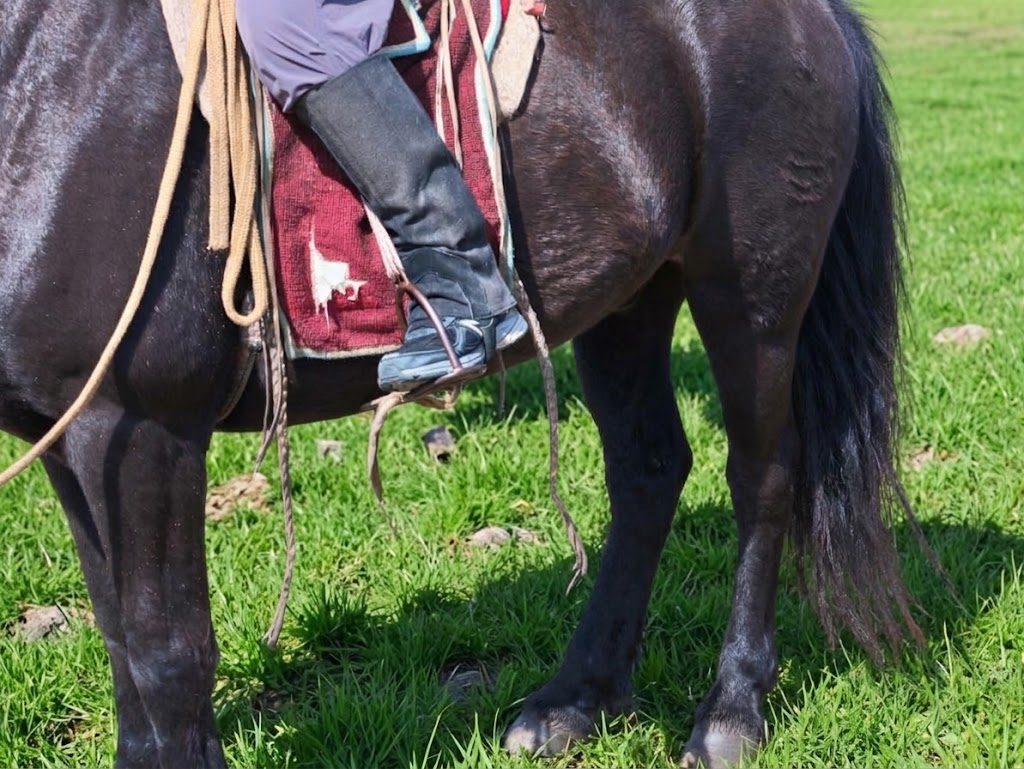
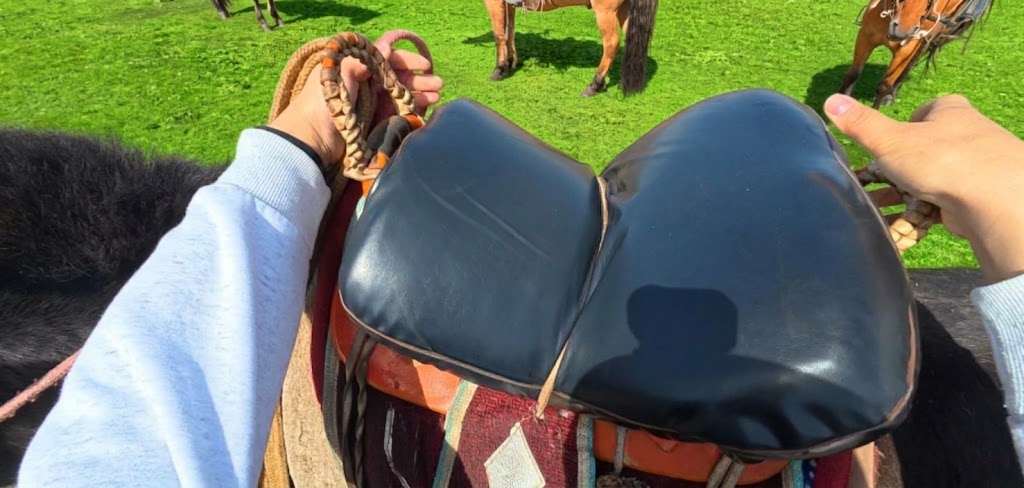
At our camp, we use a “Western saddle” that makes it easy for beginners to keep their balance. It has a protruding horn at the front that you can hold onto.
- When mounting (riding): With a staff member firmly holding the horse, guests mount one by one in turn. Stand on the left side of the horse, hold the reins in your left hand, place your hand on the front of the saddle (or the horn), and support the saddle with your right hand. Put your left foot in the stirrup, use the momentum to rise smoothly, swing your right leg broadly over the horse’s back, and gently seat yourself in the saddle. The key is not to drop down into the saddle with a heavy thud.
- When dismounting (getting off): For safety, rather than removing both feet at once, completely take your right foot out of the stirrup, and leave your left foot lightly in the stirrup so it can be easily removed right after landing. Lean forward, swing your right leg backward, and land softly on the left side of the horse.
3. Getting Used to the Motion Through “Led Riding” Where Staff Guide the Horse First
Right after mounting the horse, you will not set off immediately. The staff will double-check the fitting of helmets and protectors as well as the stirrup length, and you will start with “led riding,” where a staff member leads and walks the horse.
The important thing during this time is to direct your gaze toward the direction you are going, rather than looking at your hands, the horse’s neck, or the ground. Relax your shoulders and slowly get a feel for placing the center of gravity in the middle of the saddle.
4. Basic Operation Training: Practicing “How to Stop” Before “How to Move Forward”
After taking a break following the led riding, you will finally move on to practicing giving cues yourself. In our camp’s lessons, we practice “how to stop” before “how to move forward.” This is so you can start moving with the peace of mind that “I can stop the horse myself.”
- Stopping (Halt): Slowly pull the reins toward you from around the base of the horse’s neck, straighten your back, plant your feet, and lean your body slightly backward (like a game of tug-of-war). Once the horse stops, do not keep pulling the reins; relax your hands a little.
- Moving Forward (Start): Direct your gaze toward the flag or scenery in the direction you want to go, and voice the cue for Mongolian horses, “Chu!”
- Turning (Changing Direction): Instead of looking at your hands, firmly gaze at the direction you want to go (such as a target landmark) and guide the horse by opening the rein toward the direction you want to turn.
[Q&A] Frequently Asked Questions Before Horseback Riding
Q. Is it okay if I am not good at sports or lack confidence in my physical stamina?
A. It is completely fine! What is important in horseback riding is not arm strength, but staying relaxed and maintaining balance. Staff members will stay right beside you and support you at your own pace.
Q. Will we gallop across the steppe right away?
A. No. First, we will check in a fenced practice area whether you can safely perform the basic operations of “moving forward, stopping, and turning.” We will only head out to the steppe after the instructor determines that you can ride safely, so we will never push you to advance prematurely.
Connecting Hearts with the Horse, One Step at a Time
Horseback riding is not operating a machine, but a special experience of communicating hearts with a living animal. As you calmly build up your cues one by one, you will come to truly experience the joy of the horse responding to your instructions.
Our staff will support you closely and attentively, so please come and challenge yourself to steppe horseback riding with peace of mind!