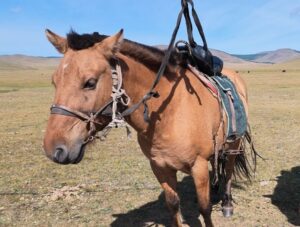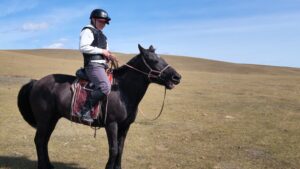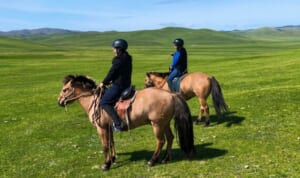
Hello! I am Chika, and I teach horseback riding at Horse Camp Mongolia.
When you hear the phrase “nomads and horses,” what kind of scene comes to mind?
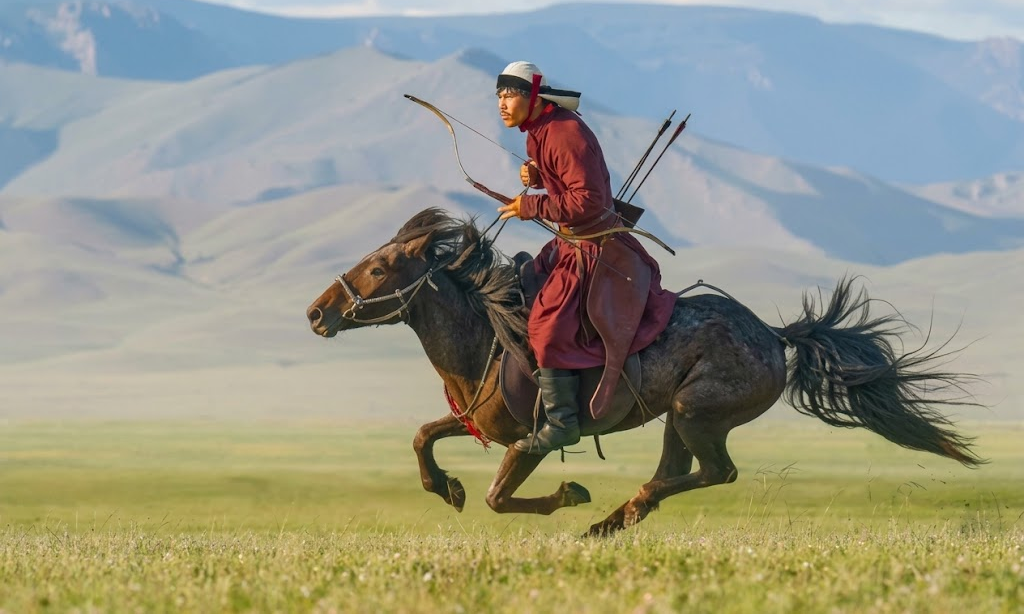
Many people might imagine figures dashing gracefully across boundless grasslands or rugged nomadic scenes straight out of a movie.
I was born and raised in a family that has practiced nomadism for generations in the vast grasslands of Mongolia. Ever since I can remember, horses have always been around our home, and the sound of horses breathing and their hooves has been the background music of my life.
Visitors often ask me, “What do horses mean to the people of Mongolia?” It is very difficult to answer in a single word, but to us, horses are “livestock for survival, irreplaceable family, and unique partners for surviving the great outdoors.”
Today, I would like to talk about the “true connection between horses and humans” felt in the daily lives of nomads—things that aren’t written in textbooks.
1. Their Role as “Livestock” to Survive the Grasslands
Looking at the practical side of daily life first, horses are important livestock that fundamentally support the lives of nomads.
- Becoming our hands and feet for moving and grazing
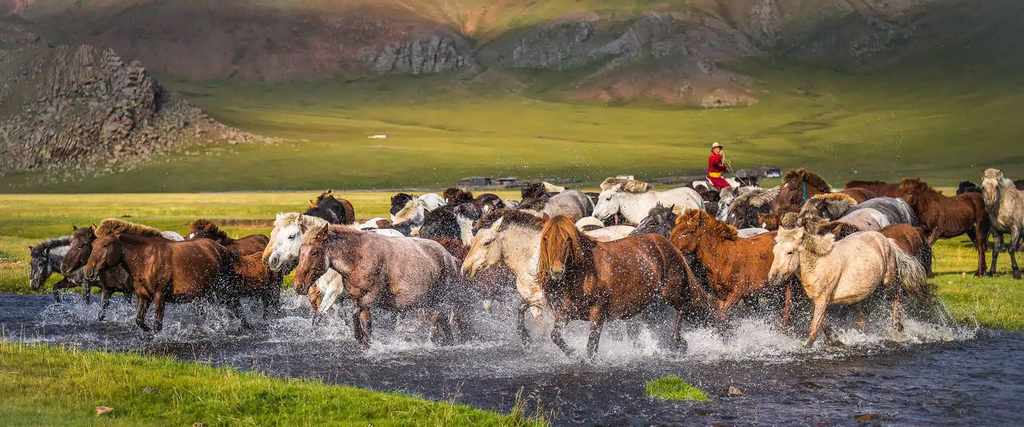
When advancing across vast grasslands, rocky mountains, or muddy paths with no roads, horses are more reliable than any car or motorcycle. When moving across pastures to herd hundreds of sheep and goats, nomadic life cannot function without the mobility and intelligence of horses. - Blessings that sustain life (Airag and horse meat)
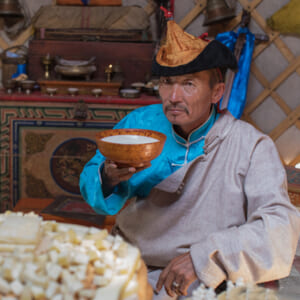
In summer, we receive a small share of milk from mares to make “Airag” (fermented mare’s milk), a traditional fermented beverage. Rich in vitamins and minerals, it is an essential nutritional source that protects our health in the grasslands where vegetables are difficult to grow. Additionally, horses sacrifice their lives as a precious food source to help us survive harsh winters where temperatures drop to tens of degrees below zero.
Because they are beings that share every possible blessing necessary for survival without reservation, nomads hold a deep reverence for horses.
“Family” That Teaches the Warmth of Life from Early Childhood
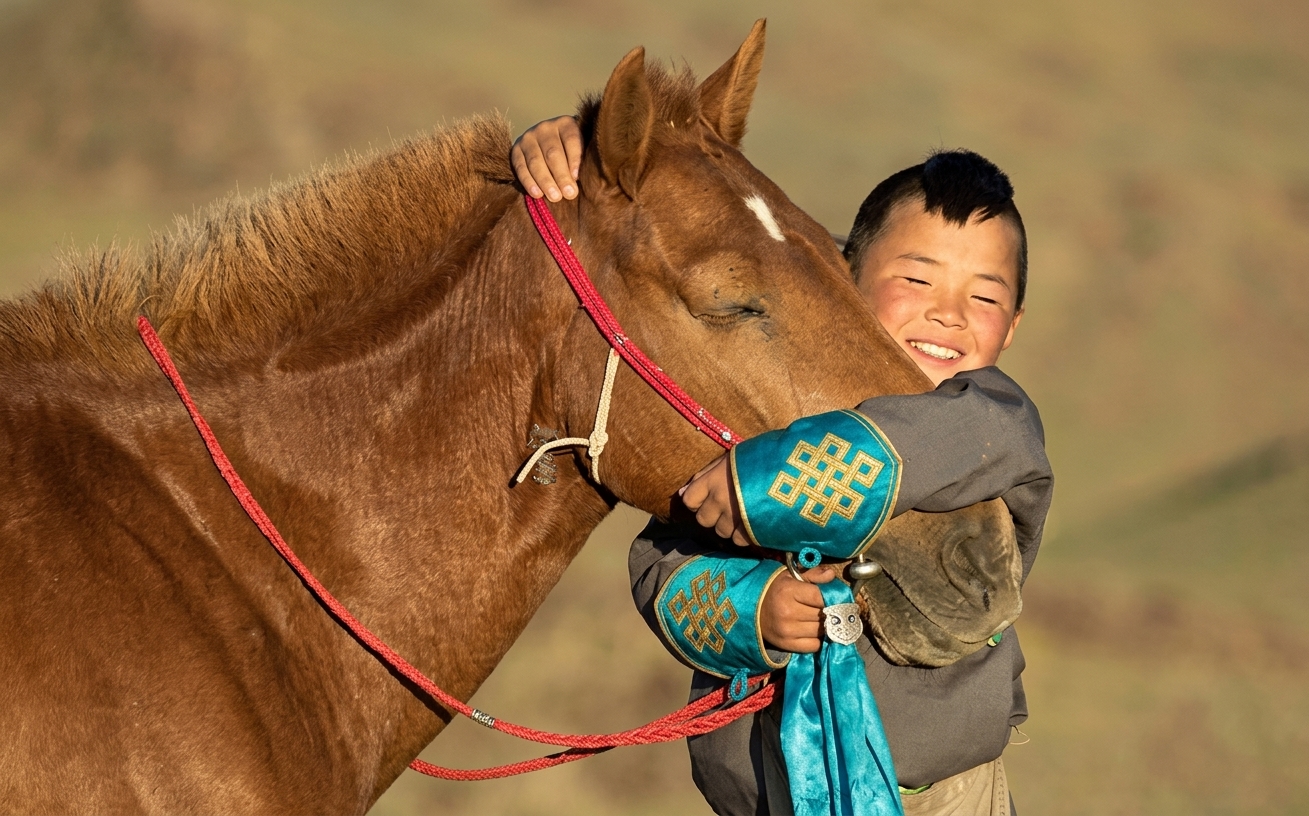
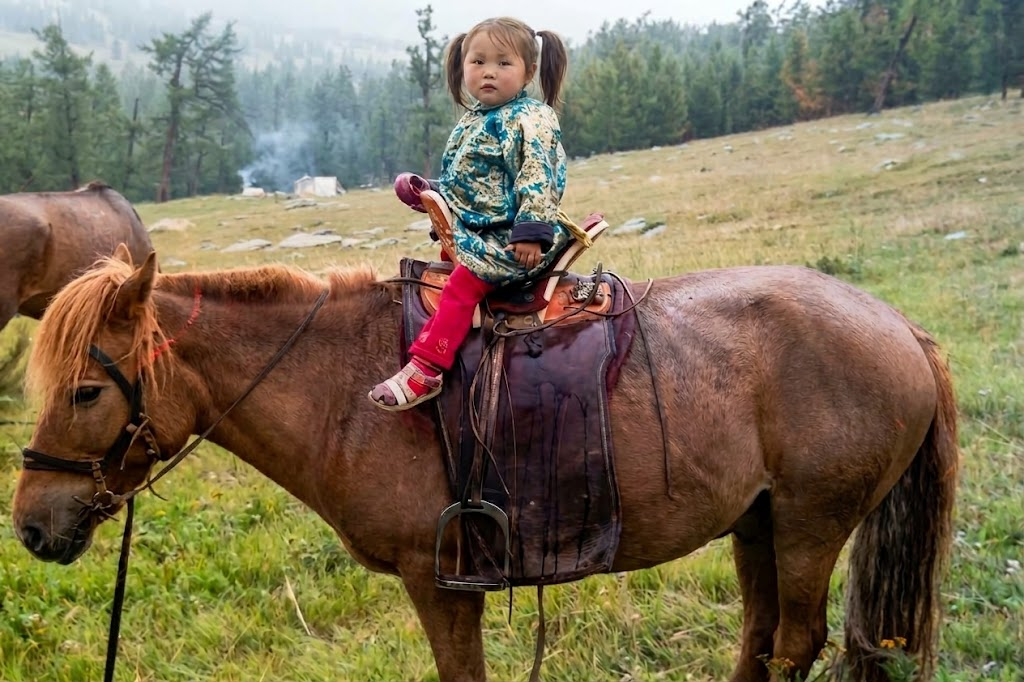
Children of Mongolian nomads interact with horses around the same time they start learning to walk.
- “Before riding in a saddle, you learn balance by riding directly on the horse’s back.”
- “When a child who won’t stop crying is placed on a horse’s back, the comforting rocking motion makes them fall fast asleep.”
It was the same in my family. While my parents were busy working, the horses stayed close by like babysitters. On severely cold winter mornings, I still vividly remember wrapping my freezing hands around a horse’s neck and feeling its surprisingly warm body temperature bring me peace of mind.
Horses are by no means pets locked away in cages. Because they graze freely in the harsh natural environment year-round, they do not live under the same roof, but they breathe together like one big family across this vast land.
A “Partner” Who Entrusts Lives to Each Other Beyond Words
And above all, horses are “the ultimate partners with whom we can entrust each other’s backs” for nomads.
Mongolian horses do not move simply because a human pulls the reins with brute force. They sense the tone of the rider’s voice, subtle shifts in the rider’s center of gravity, and even “hesitation in the heart” with astonishing accuracy.
- It is the horse that finds the way in a storm or blizzard
When caught in a fierce sandstorm or snowstorm where visibility drops to zero, nomads sometimes do not force the reins and instead leave the direction of travel to the horse. This is because the horse steadily walks toward home using its own memory and the scent of the wind. - “Exchanging cues” rather than just “carrying a rider”
Nomads do not try to dominate horses like tools. They start moving at a single voice cue—”Chu!”—and stop by sensing the rider’s intention with just a slight pull on the reins. That free riding is born precisely because there is a relationship of trust, not brute force.
Not forcing each other and respecting one another as equal living creatures. That is why—遊牧民と馬の間には、言葉のない深い友情が芽生えるのです。
[Q&A] Frequently Asked Questions About Nomads and Horses
Q. Are all Mongolian horses wild?
A. No, all horses kept by nomads are livestock. However, rather than being kept enclosed on all sides by fences like stables in places like Japan, they are allowed to roam and graze freely across the vast grasslands, giving them strong vitality and instincts close to being semi-wild.
Q. Do horses have names?
A. They are rarely given human-like names; instead, they are mostly called by their coat color or physical characteristics, such as “Tsagaan” (White) or “Zeer” (Chestnut). Even without tying them to names, every member of the family thoroughly understands each horse’s personality and walking habits.
The Horses You Meet on the Tour Are Also Living Partners
The horses that carry guests at Horse Camp Mongolia were also raised within this nomadic lifestyle and have built a connection of hearts with humans.
They are not vehicles prepared as tourist attractions, but “living beings” with emotions, moods for the day, and eyes fixed steadily on you.
When you ride on a horse’s back during the tour, please try to feel the warmth of its strong back and the breathing that cuts through the wind. You will surely experience firsthand not just riding a horse, but the “comfort of living alongside horses” that Mongolian nomads have passed down for thousands of years!